
No Man’s Land
Posted: January 15, 2014 Filed under: Broadway, Comedy, Drama, Play, Revival | Tags: beckett, captainpicard, cort, engaged, godot, haroldpinter, ianmckellen, nomansland, patrickstewart, pinter, pinteresque, rep, review, samuelbeckett, waitingforgodot, youshallnotpass Leave a comment
I try so hard with Harold Pinter. I loved studying him in school. I even wrote a “Pinteresque” one-act with my friend Sandy entitled The Bells for a class during senior year of high school (for a brief excerpt, see the end of this review). Pinter’s writing can be so funny and thought-provoking, but when I see productions, I don’t end up being as riveted as I had hoped. I understand his significance and place in theatre history, but the plays simply don’t do anything for my soul. I want to stress that this is not to say No Man’s Land is not a good production; it’s just not my taste. So please don’t let this review stop you from going to see it. The show has received rave reviews and rightly so. I think I’m just realizing that while I may appreciate Pinter, I don’t necessarily enjoy his plays.
No Man’s Land might be the one to see though, especially when you’ve got A-list actors like Ian McKellen and Sir Patrick Stewart sharing the stage. It’s pretty grand being in the same room with both of them. Their presence alone is effective. They can hold a room with no words at all, and the cast is nicely rounded out by the younger fellows, Billy Crudup and Shuler Hensley. But don’t expect to go, sit back, and let them do all the work – Pinter expects you to pay attention. There is so much subtext and double-meaning and subtlety to sift through in his language it can take up to 15 seconds to catch on to the fact that a joke was just made.
This production is currently playing at the Cort Theatre in rep with Samuel Beckett’s Waiting for Godot. The similarities between the plays are clear: there is a sense of isolation for these characters and feeling trapped in both pieces. And the audience must work hard to understand the given circumstances. In No Man’s Land, we wonder what these men’s relationships are. Where are we? Why are we here? What should we take away from this experience? Whatever you do, don’t expect clear answers. You might finish Act One with an idea about who these folks are and their relationship to each other, but then Act Two turns any semblance of an idea you once had on its head. All of a sudden you have to adapt to entirely new information. And then, for me anyway, the “plot” basically falls off any kind of trackable course. You can try your best to make it make sense, searching for linear storylines and/or relationships, but I think you’ll just end up more confused. As director Sean Mathias explains, “Pinter isn’t saying what he necessarily means or meaning what you might like to believe. Like Godot, No Man’s Land is a game of memory, of time elapsed and elapsing; dealing with things abstracted, ideas and not realities.”
If you’re interested in seeing iconic actors and an iconic playwright then definitely check it out, or if you’d prefer, you can wait for Godot with me. Personally, I am more excited for Beckett’s classic, although my younger self would never have believed that statement, given that the first time I saw the play I was so angry with how much time I’d wasted waiting for this jack-ass Godot. But – that was before I studied the play with the brilliant Dr. Coppa at Muhlenberg College. You know, perhaps that’s what I need to fully understand and enjoy Pinter’s work, too. I just need to go back to class.
Update 4/26/16: This production is transferring to London this summer. You can find more information here.
No Man’s Land
Written by Harold Pinter, Directed by Sean Mathias
Cort Theatre through March 30th
Photo Credit: Joan Marcus
Pictured: Ian McKellen and Patrick Stewart
And now, what you’ve all been waiting for…an (incredibly brief) excerpt from The Bells:
Cecil: Did you change your hair?
Raine: What?
Cecil: Your hair- is it different?
Raine: No.
Cecil: You seem different. Are you sure?
Raine: Yes…I did…nothing to my hair.
Pause.
Richard III
Posted: January 10, 2014 Filed under: Broadway, Comedy, Drama, Revival, Shakespeare | Tags: allmale, belasco, markrylance, mykingdomforahorse, rep, review, richardiii, samuelbarnett, shakespeare, twelfthnight Leave a comment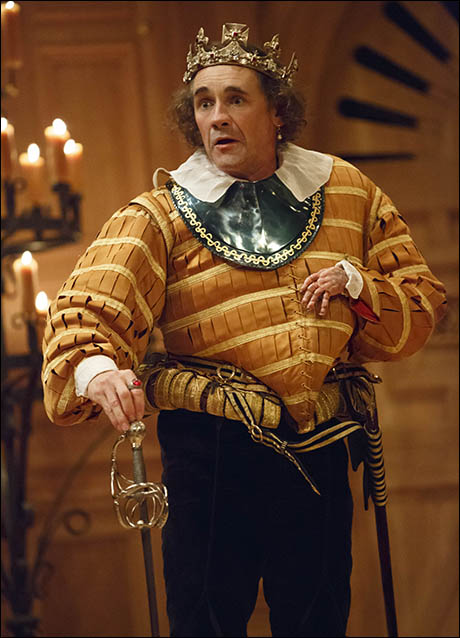
Have I mentioned Mark Rylance is amazing?
On January 2nd during snowstorm Hercules, I sat in the Belasco Theatre once more to see Twelfth Night‘s counterpart, Richard III – the other all-male Shakespeare production playing in rep until February 16th. For my Twelfth Night review and more details of Mark Rylance’s brilliance, click here.
What’s fantastic about Rylance’s Richard III is the way he draws in the audience, the way he shares his secrets with us. He confides in us from the opening moments, and we therefore root for him. We cheer him on throughout his bloody tirades, and we laugh with him as he manipulates everyone around him. We feel smarter and superior alongside him because we are “in the know.” We root for him until he no longer roots for himself. As Richard loses his swagger and falls into a kind of guilty despair (or insanity), we are left wondering what happened to the man who once strutted across the stage with such confidence and vigor. The other noticeable trait of this Richard is his sincerity with his fellow characters. In this brief New York Magazine interview, Rylance talks about not playing the obvious evil or falsehood that is largely associated with Richard but rather being as genuine as possible when in the company of others. Why make the other characters fools? Instead they can fully trust this man right up until he betrays them. What it comes down to is that you should go see anything Mark Rylance does. Anything.
That said, I will say that this production didn’t strike me the way Twelfth Night did. I found myself conscious of the staging/blocking in a way that never even crossed my mind during the ever-flowing Twelfth. And Richard may be five minutes shorter, but it felt longer. It drags more than I’d like, and I was so angry with myself for being bored. Note: this mostly happened whenever Rylance left the stage.
I also wanted much more from Lady Anne (the actor doubles as Sebastian). He felt very one-note to me, particular during his big scene with Richard. Now, this is an epically hard scene, and anyone who has ever played the role, whether in acting class or a full production, knows the challenges it brings. Anne is grieving at her father-in-law’s funeral when she is approached by Richard who killed both her father-in-law and her husband. Over the course of a five-minute scene, Dick convinces her to marry him (!). It’s insane to play. She has to journey through so many emotions to get to this point: hatred, disgust, betrayal, desperation, surrender, love, [insert additional acting choice here]. But this Anne yelled for most of the scene, and I was quite disappointed.
Samuel Barnett as Queen Elizabeth, on the other hand, once again impressed me. I very much enjoyed his Viola in Twelfth, and I loved seeing him play a statuesque queen this time around. There is an extremely challenging scene in Act II between Elizabeth and Richard, and it was so fantastic. The verbal swordplay and push and pull between these two actors was simply enticing. Elizabeth is an excellent match for Richard, perhaps the only real match to his wit, and Richard knows it. In their final exchange, Elizabeth stole the power back, and upon her exit, the audience cheered for her. And ohhh man, the look we got from Richard was unreal. He stared out at us with eyes of daggers, and it was clear we were no longer his friends. In fact, we may be next on his list.
Richard III
Written by William Shakespeare, Directed by Tim Carroll
Belasco Theatre through February 16th
Photo Credit: Joan Marcus
Pictured: Mark Rylance
The Sound of Music Live!
Posted: January 6, 2014 Filed under: Movie, Musical, Spotlight on TV | Tags: audramcdonald, carrieunderwood, christianborle, laurabenanti, live, maria, musical, nbc, review, soundofmusic, stephenmoyer, thehillsarealive, thesoundofmusiclive, vontrapp 2 Comments
Amidst my Christmas holiday week of movie watching (American Hustle, Casablanca, City Island, and Frozen a second time), I managed to find the time to finally sit down and view The Sound of Music Live! I have since been debating whether or not to post about it. I feel like everyone and their mother have already put their two cents in, particularly in the theatre community, and it was quite the mix of feelings. It seemed like this musical broadcast became either a personal affront to viewers or a personal accomplishment. There was a lot of hate and a lot of preaching back to that hate. My Facebook news feed blew up the way it does when there’s a big football game on, and I end up having no idea what anyone’s status means. But I figure things have died down a bit, and I suppose it can’t hurt to throw a couple more pennies into the mix, right?
Let’s start with the good, shall we? There was some lovely singing, smooth camera work, and solid nun talent. Vampire Bill – I mean, Stephen Moyer? He did a pretty decent job! That kid playing Kurt? Great. He was in it. Audra? Clearly. Do we even need to talk about her? Everyone already knows she’s a goddess. It was a pleasure to have real theatre folks involved like Christian Borle as Max. There’s an extra comfort level in watching stage actors do what they do best, especially those who already have TV experience.
But let’s be serious, I’m mostly writing this review so I can brag about Laura Benanti. I love her, love her, love her, and I’m so glad people are finally starting to take notice of her abilities. I was never drawn to Elsa growing up. I didn’t understand the character, but now she’s clear to me. Laura brings a naturalism to the role, to live filming, to song, to everything. And thank god we had her for some laughs.
Of course there were weak links, but I honestly don’t want to dig into them too much. I don’t know what was up with the costumes. Some of the kids were hard to watch. The mountain set was awkward, although the scene changes were smooth and well done.
Listen, I know you’re all waiting for me to rip into Carrie, but I don’t really want to do that. The critics have been cruel enough. I’ll just say this: I feel bad that she and the people who represent her thought this was a good idea. She’s talented and clearly can sing, but she is simply not an actress. This doesn’t make her untalented; it just makes her not an actress. There isn’t an acting instinct in her bones. I was frankly very uncomfortable watching her speak any dialogue. I also feel bad that they yanked all of the “Southerness” out of her. This at least gives her character and flavor. True, Maria shouldn’t be a Southern belle, but without it, she came across as vanilla and bland. I understand that Carrie was cast to draw in viewers. Hopefully next time they’ll find a name that can better carry a show.
All that said I’m thrilled they took on this endeavor. It’s a wonderful chance for people who don’t live in a big theatre city to get to see a musical on screen. To this day, musicals still don’t get a lot of respect. People consider them merely fluffy or lame; they’re all flash and spectacle and couldn’t possibly affect audiences the way plays can. The fact that NBC is going to do another live musical due to the ratings The Sound of Music got is fantastic as far as I’m concerned. Folks associating musical theatre with high ratings? I don’t know about you, but as a musical theatre fan through and through, I’ll take that any day.
The Sound of Music Live!
Directed by Rob Ashford and Beth McCarthy-Miller
Aired live on NBC on December 5, 2013
Photo Credit: Will Hart
Pictured: Stephen Moyer and Laura Benanti
Spotlight on TV: Orphan Black
Posted: December 30, 2013 Filed under: Spotlight on TV | Tags: alison, bbcamerica, clairedanes, clones, cosima, emmys, felix, helena, homeland, orphanblack, review, sarahmanning, spotlightontv, tatianamaslany 1 Comment
I’m cheating! I’m straying from the Broadway world to talk about television! Gasp!
It’s true though, I can’t help myself: I watch a lot of television. I learn just as much from good TV as I do from live theatre nowadays. We are in a day and age of some excellent TV right now. Ten years ago people talked about movies: “What have you seen? What should I go see? What’s not to be missed?” But now? We talk TV. Catching up with a friend? I guarantee you’ll cover your new show obsession, whether it’s Breaking Bad, Orange Is the New Black, House of Cards, Veep, The Good Wife, Louie, Parks and Recreation. I could keep listing. The options out there are endless…as is my To-Watch list. It’s getting longer by the second, and I can’t keep up.
What often happens is I find out about another show and get distracted from what I’m already in the middle of. At the moment, I’m particularly fond of easy binge shows (aka fewer episodes in a season), because then I know I can catch up faster. This brings me to Orphan Black.
(Forgive me if you’ve already heard this spiel from me before when this was the only thing I was talking about a few months ago.)
I found out about Orphan Black on tumblr of all places. I saw a video of a woman winning the Critics’ Choice Award for Best Actress in a Drama Series over Claire Danes. Now, I haven’t watched Homeland (I know, I know, it’s on my list), but Claire wins everything. I know that much. So for this new chick to win and to see the folks in the audience looking around in surprise, I knew this was something I wanted to pay attention to.
Orphan Black is on BBC America. Season 1 aired last spring (10 episodes), and I don’t know if a show has ever gotten so much buzz months after its season finale. Unfortunately there was not enough buzz to get Tatiana Maslany the Emmy nod she deserved, but she did just get a Golden Globe nomination a couple weeks ago!
This series is a weird mix of drama, sci-fi, dark comedy, and action. What you really need to know though is that it’s about clones. I want to share more, but I think it’s more exciting to find out about the twists and plot developments as you watch. Not into the sci-fi genre? That’s okay. The reason to watch the show is Tatiana Maslany. She plays the protagonist, Sarah Manning, and you know, some clones. What’s brilliant is that each clone is a completely new and nuanced character. Maslany absolutely transforms. Sure it helps with different hair and clothing, but even with the external stuff aside, she fully becomes the other clones. Maslany shifts her physicality, energy, accent, and even where her voice sits in her register. It’s mesmerizing to watch. And I’m not lying when I say there have been multiple occasions when I have looked at the credits trying to see who played a certain clone.
I know everyone is swamped with life and all that, but if you find yourself snowed in or hibernating some random weekend this winter, I recommend a good ol’ fashioned Orphan Black binge, and then together we can freak out during Season 2 (premiering April 19th).
A Christmas Story
Posted: December 24, 2013 Filed under: Comedy, Musical, Off-Broadway | Tags: achristmasstory, bbgun, danlauria, leglamp, madisonsquaregarden, pasekandpaul, ralphie, review, tour, youllshootyoureyeout Leave a comment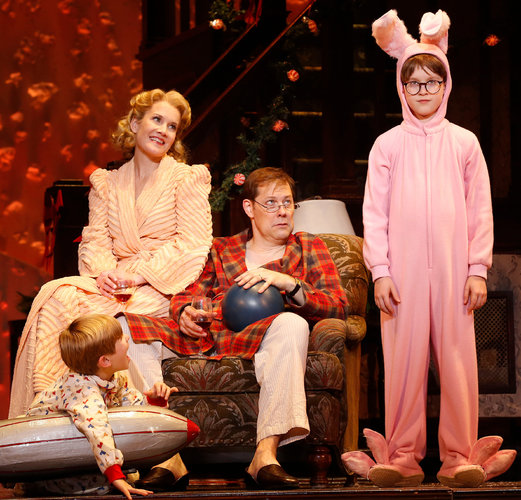
Part of me feels like I should watch A Christmas Story the movie before reviewing A Christmas Story: The Musical. Yup, it’s true – I have never seen this iconic Christmas film. And not because I’m Jewish I might add; we used to watch It’s a Wonderful Life every Christmas (we’ve since moved on to Love Actually). And even though A Christmas Story was always on TV, I never wanted to start in the middle. So now I have finally seen it – set to song and dance!
For those of you that don’t know, A Christmas Story came to Broadway last season, nabbed a few Tony nominations (Best Musical, Book, and Score), and has been touring around the country. It is now in the middle of a sit-down (a longer tour stop) at the Madison Square Garden theatre. And let me digress for a second here: Madison Square Garden is inSANE. I had never been inside (well, except maybe once as a kid), but it was like an amusement park. Our bags were checked, our persons frisked, we went up escalators galore, and encountered the enormous box office where they asked if I was picking up tickets for the musical or the Rangers game. The theatre itself has something like 5,000 seats! To top it off, they were selling cotton candy, crackerjacks, and popcorn as if we were at a baseball game. This place is quite the attraction.
But anyway, back on topic, Becca. On the whole, A Christmas Story is a jolly evening at the theatre. While not a perfect show, it’s definitely solid – directed by John Rando (Tony winner for Urinetown), with smart musical numbers, a talented cast, and a cutesy book. The kids in the audience were having a blast, and you can hear everyone enjoying lines or scenes before they even happen because they already know the story. Matt and I, however, were in the minority. We didn’t know what was in The Old Man’s special delivery crate marked Fragile or whether Ralphie would get the BB-gun for Christmas, so it was fun to see a new story.
The strongest part of the show is the score. As I mentioned in my Dogfight post last week, Pasek and Paul are where it’s at. These guys know how to write. Some highlights include: the opening, “It All Comes Down to Christmas”; The Old Man’s big song and dance number, “A Major Award,” featuring none other than a leg lamp kick line; and “You’ll Shoot Your Eye Out,” the big speakeasy tap number in Act II, which was featured on the Tony Awards last summer. And starring in that number as Miss Shields is Caroline O’Connor, all you Moulin Rouge fans out there! Not to mention the ridiculously talented tapping child, Luke Spring.
While the book is endearing, the musical is maybe 15 minutes too long, and there were a few things that let me down. I wanted Mother (Erin Dilly) to get an opportunity to let loose. The writers very much embrace the times here (the 1940s), and her two songs are the beautiful ballads about being a mother. But The Old Man (John Bolton) gets to go nuts with his award song. Also, Matt and I couldn’t figure out his character. One moment he seems pretty dumb, the next he’s cussing up a storm (albeit it’s fake cursing; is it like that in the movie?), then he’s got this mean streak that scares the kids. Nonetheless, it was a very funny performance by Bolton.
Mainly, what didn’t work for me was the narration led by Dan Lauria. This convention slowed things down. I’ve been told there is also a narrator figure in the film. Is it a voiceover? Perhaps it works better, but here he wanders around the stage like Ralphie’s odd shadow, interrupting the action to tell us things we already know. The role doesn’t particularly add to the material until the very end when he is able to articulate something young Ralphie cannot.
I do wish I could have seen this when it was on Broadway in a more intimate house. Never thought I would call Broadway intimate, but man, the theatre is so large I felt miles away from the performers. But I would venture to say that if you’re a fan of the film, you’ll be a fan of the musical. If anything, you can always count on the handful of heartwarming moments that bring a tear to the eye. And ain’t that what Christmas musicals are for?
A Christmas Story: The Musical
Written by Benj Pasek, Justin Paul, and Joseph Robinette, Directed by John Rando
Madison Square Garden the Theater through December 29th
Photo Credit: Carol Rosegg
Pictured: Noah Baird, Erin Dilly, John Bolton and Jake Lucas

 Becca on Broadway